Buy umgebung.eu ?
We are moving the project
umgebung.eu .
Are you interested in purchasing the domain
umgebung.eu ?
domain@kv-gmbh.de · 0541-91531010
Buy umgebung.eu ?
How do I calculate percentages of percentages?
To calculate percentages of percentages, you first convert the percentages into decimals by dividing by 100. Then, multiply the two percentages together to get the final percentage. For example, if you want to find 20% of 50%, you would first convert 20% to 0.20 and 50% to 0.50. Then, multiply 0.20 by 0.50 to get 0.10, which is 10% of the original value. **
Why are percentages reversible?
Percentages are reversible because they represent a proportional relationship between two quantities. For example, if 20% of a quantity is 40, then 40 is 20% of the quantity. This reversibility is a fundamental property of percentages and allows for easy conversion between percentages and their corresponding values. It also makes it possible to calculate the original quantity when given the percentage and the resulting value. **

Similar search terms for Percentages
Top-Angebote
Products related to Percentages:
-
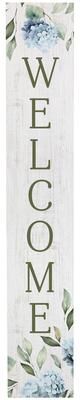
Sincere Surroundings Porch Board Weatherproof Blessed Colorful Pumpkins - 8x46.5x.5"Weatherproof porch boards! Engineered to withstand the harshest elements and ensure unmatched durability. These porch boards are the perfect foundation for your outdoor space. Proudly designed, manufactured and printed in the USA. Size: 8"" x 46.5"" x..."47,49 $*Shipping: 0,00 $Secure redirect to the provider



-
How do you calculate percentages?
To calculate percentages, you first need to determine the total value or amount you are working with. Then, you divide the part you are interested in by the total value. Finally, multiply the result by 100 to get the percentage. For example, if you want to find out what percentage 25 is of 100, you would divide 25 by 100 (0.25) and then multiply by 100 to get 25%. **
-
Does Excel calculate percentages incorrectly?
Excel does not calculate percentages incorrectly. However, sometimes users may encounter issues with percentage calculations if the data is not formatted correctly or if there are errors in the formulas. It is important to ensure that the data is entered accurately and that the formulas are set up correctly to get accurate percentage calculations in Excel. **
-
How do I calculate percentages?
To calculate a percentage, you first need to determine the total value of the data set you are working with. Then, you divide the specific value you are interested in by the total value and multiply by 100. This will give you the percentage of the specific value in relation to the total value. For example, if you have 20 apples out of a total of 100 fruits, the percentage of apples would be (20/100) * 100 = 20%. **
-
How do you round percentages?
To round percentages, you can follow the standard rounding rules. If the digit to the right of the desired decimal place is 5 or greater, you round up. If the digit is 4 or lower, you round down. For example, if you have a percentage of 56.78% and you want to round it to the nearest whole number, you would look at the digit in the second decimal place (8) and round up to 57%. **

How can you convert percentages?
To convert a percentage to a decimal, you simply divide the percentage by 100. For example, to convert 25% to a decimal, you would divide 25 by 100, which equals 0.25. To convert a percentage to a fraction, you can write the percentage as a fraction with a denominator of 100 and then simplify if possible. For example, 50% can be written as 50/100, which simplifies to 1/2. **
How do you add percentages?
To add percentages, you first convert each percentage to a decimal by dividing by 100. Then, you add the decimals together. Finally, convert the sum back to a percentage by multiplying by 100. For example, if you want to add 20% and 30%, you would convert them to decimals (0.20 and 0.30), add them (0.20 + 0.30 = 0.50), and then convert the sum back to a percentage (0.50 x 100 = 50%). **
Top-Angebote
Products related to Percentages:
-
Sincere Surroundings Weatherproof Porch Boards Hide PackagesA witty welcome for the home where packages are a closely guarded secret, this porch board is designed to greet every delivery driver and guest at the front door with humor and charm.42,99 $*Shipping: 0,00 $Secure redirect to the provider
-
How do I calculate percentages of percentages?
To calculate percentages of percentages, you first convert the percentages into decimals by dividing by 100. Then, multiply the two percentages together to get the final percentage. For example, if you want to find 20% of 50%, you would first convert 20% to 0.20 and 50% to 0.50. Then, multiply 0.20 by 0.50 to get 0.10, which is 10% of the original value. **
-
Why are percentages reversible?
Percentages are reversible because they represent a proportional relationship between two quantities. For example, if 20% of a quantity is 40, then 40 is 20% of the quantity. This reversibility is a fundamental property of percentages and allows for easy conversion between percentages and their corresponding values. It also makes it possible to calculate the original quantity when given the percentage and the resulting value. **
-
How do you calculate percentages?
To calculate percentages, you first need to determine the total value or amount you are working with. Then, you divide the part you are interested in by the total value. Finally, multiply the result by 100 to get the percentage. For example, if you want to find out what percentage 25 is of 100, you would divide 25 by 100 (0.25) and then multiply by 100 to get 25%. **
-
Does Excel calculate percentages incorrectly?
Excel does not calculate percentages incorrectly. However, sometimes users may encounter issues with percentage calculations if the data is not formatted correctly or if there are errors in the formulas. It is important to ensure that the data is entered accurately and that the formulas are set up correctly to get accurate percentage calculations in Excel. **
Similar search terms for Percentages
-
Sincere Surroundings Porch Board Weatherproof Blessed Colorful Pumpkins - 8x46.5x.5"Weatherproof porch boards! Engineered to withstand the harshest elements and ensure unmatched durability. These porch boards are the perfect foundation for your outdoor space. Proudly designed, manufactured and printed in the USA. Size: 8"" x 46.5"" x..."47,49 $*Shipping: 0,00 $Secure redirect to the provider
-
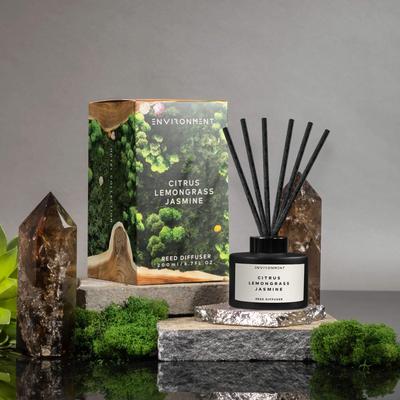
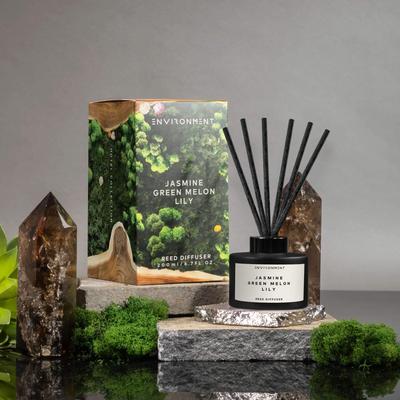
ENVIRONMENT Diffuser Inspired by The Wynn Hotel® - 200mLVegan and cruelty-free. Diffuser that is inspired by The Wynn Hotel®. Juicy green melon and nectarine blend into a heart of jasmine and lily ending with notes of blackberry and oakmoss.39,28 $*Shipping: 0,00 $Secure redirect to the provider
-
How do I calculate percentages?
To calculate a percentage, you first need to determine the total value of the data set you are working with. Then, you divide the specific value you are interested in by the total value and multiply by 100. This will give you the percentage of the specific value in relation to the total value. For example, if you have 20 apples out of a total of 100 fruits, the percentage of apples would be (20/100) * 100 = 20%. **
-
How do you round percentages?
To round percentages, you can follow the standard rounding rules. If the digit to the right of the desired decimal place is 5 or greater, you round up. If the digit is 4 or lower, you round down. For example, if you have a percentage of 56.78% and you want to round it to the nearest whole number, you would look at the digit in the second decimal place (8) and round up to 57%. **
-
How can you convert percentages?
To convert a percentage to a decimal, you simply divide the percentage by 100. For example, to convert 25% to a decimal, you would divide 25 by 100, which equals 0.25. To convert a percentage to a fraction, you can write the percentage as a fraction with a denominator of 100 and then simplify if possible. For example, 50% can be written as 50/100, which simplifies to 1/2. **
-
How do you add percentages?
To add percentages, you first convert each percentage to a decimal by dividing by 100. Then, you add the decimals together. Finally, convert the sum back to a percentage by multiplying by 100. For example, if you want to add 20% and 30%, you would convert them to decimals (0.20 and 0.30), add them (0.20 + 0.30 = 0.50), and then convert the sum back to a percentage (0.50 x 100 = 50%). **
* All prices are inclusive of VAT and, if applicable, plus shipping costs. The offer information is based on the details provided by the respective shop and is updated through automated processes. Real-time updates do not occur, so deviations can occur in individual cases. ** Note: Parts of this content were created by AI.