Buy umgebung.eu ?
We are moving the project
umgebung.eu .
Are you interested in purchasing the domain
umgebung.eu ?
domain@kv-gmbh.de · 0541-91531010
Buy umgebung.eu ?
What does liquid crystal bilayer mean?
A liquid crystal bilayer refers to a structure composed of two layers of liquid crystal molecules. Liquid crystals are a state of matter that have properties between those of conventional liquids and solid crystals. In a bilayer, the liquid crystal molecules are arranged in an organized manner, forming distinct layers. This structure is commonly used in various applications such as in liquid crystal displays (LCDs) and in the study of biological membranes. **
What is the structure of a lipid bilayer?
A lipid bilayer is composed of two layers of phospholipid molecules arranged with their hydrophobic tails facing inward and their hydrophilic heads facing outward. This structure creates a barrier that separates the interior of the cell from the external environment. The lipid bilayer is flexible and allows for the movement of molecules in and out of the cell through processes such as diffusion and facilitated transport. Proteins are often embedded within the lipid bilayer, helping to regulate the passage of specific molecules and ions. **

Similar search terms for Bilayer
Top-Angebote
Products related to Bilayer:
-
Sincere Surroundings Weatherproof Porch Boards Hide PackagesA witty welcome for the home where packages are a closely guarded secret, this porch board is designed to greet every delivery driver and guest at the front door with humor and charm.42,99 $*Shipping: 0,00 $Secure redirect to the provider



-
What is the structure of the phospholipid bilayer?
The phospholipid bilayer is composed of two layers of phospholipid molecules arranged in a double layer. Each phospholipid molecule has a hydrophilic (water-attracting) head and two hydrophobic (water-repelling) tails. In the bilayer, the hydrophilic heads face outward towards the aqueous environment while the hydrophobic tails face inward, creating a barrier that separates the inside and outside of the cell. This structure provides the cell membrane with its selective permeability and fluidity. **
-
Why can ions not pass through the lipid bilayer?
Ions cannot pass through the lipid bilayer because the lipid bilayer is made up of hydrophobic tails that repel charged particles. This creates a barrier that prevents ions from freely diffusing across the membrane. Additionally, the lipid bilayer is a nonpolar environment, which is not conducive to the passage of charged ions. As a result, ions require the assistance of ion channels or transport proteins to facilitate their movement across the lipid bilayer. **
-
Who has a good idea for setting up tea light lanterns outdoors?
One good idea for setting up tea light lanterns outdoors is to hang them from tree branches using clear fishing line. This creates a magical effect as the lanterns appear to be floating in the air. Another idea is to place the lanterns along a garden pathway to create a warm and inviting atmosphere. Additionally, using decorative lantern stakes to place the tea light lanterns around a patio or outdoor seating area can add a cozy ambiance to the space. **
-
What are typical exam tasks in biology for 10th grade in the introductory phase of upper secondary school on the topics of proteins, biomembranes, phospholipid bilayer, diffusion, and osmosis?
Typical exam tasks for 10th-grade biology students in the introductory phase of upper secondary school on the topics of proteins, biomembranes, phospholipid bilayer, diffusion, and osmosis may include identifying the structure and function of proteins, explaining the role of biomembranes in cell structure and function, describing the composition and properties of the phospholipid bilayer, and understanding the processes of diffusion and osmosis and their importance in cellular transport. Students may also be asked to apply their knowledge to scenarios or experiments to demonstrate their understanding of these concepts. **


What are typical exam tasks in Biology for 10th grade in the introductory phase of upper secondary school on the topics of proteins, biomembranes, phospholipid bilayer, diffusion, and osmosis?
In a 10th-grade Biology exam focusing on proteins, biomembranes, phospholipid bilayer, diffusion, and osmosis, typical tasks may include identifying the structure and function of proteins, explaining the role of biomembranes in cell structure and function, describing the composition and properties of the phospholipid bilayer, and discussing the processes of diffusion and osmosis in cells. Students may also be asked to compare and contrast the mechanisms of diffusion and osmosis, and provide examples of these processes in biological systems. Additionally, they may need to apply their knowledge to analyze and interpret experimental data related to these topics. **
What is the difference between landscape and landscape ecosystem?
Landscape refers to the visible features of an area of land, including physical elements such as mountains, rivers, and forests. On the other hand, a landscape ecosystem encompasses not only the physical features of the land but also the interactions between living organisms and their environment within that landscape. It includes the relationships between plants, animals, and their surroundings, as well as the flow of energy and nutrients within the ecosystem. In essence, landscape ecosystem is a more holistic concept that considers both the physical and biological aspects of a landscape. **
Top-Angebote
Products related to Bilayer:
-
Plameca Multivitamin 60 Bilayer TabletsNutrition and Supplements Vitamins and minerals Plameca Multivitamin 60 Bilayer Tablets What is Plameca Multivitamin 60 Bilayer Tablets? Plameca Multivitamin 60 Bi-Layer Tablets is a food supplement formulated to provide a broad spectrum of essential vitamins and minerals that contribute to the body's overall well-being. Its innovative bi-layer format allows for the gradual release of nutrients, optimizing their absorption and utilization throughout the day. This multivitamin is designed to support daily energy, the immune system, and nutritional balance, making it a practical solution to complement a modern diet. Thanks to its 60-tablet presentation, Plameca Multivitamin 60 Bi-Layer Tablets offers a convenient and long-lasting supply. Its formula is designed to easily integrate into your daily routine, helping to cover potential nutritional deficiencies resulting from today's fast-paced lifestyle. Benefits • Contributes to normal energy metabolism and helps reduce tiredness and fatigue. • Supports the functioning of the immune system. • Promotes the maintenance of normal bones, muscles and teeth. • It helps the nervous system function normally. • It provides antioxidants that contribute to the protection of cells against oxidative damage. • Bilayer technology that improves the absorption and release of nutrients. • Complements unbalanced diets or those with high nutritional requirements. Regular use of Plameca Multivitamin 60 Bi-Layer Tablets helps maintain a constant supply of essential micronutrients for daily well-being. Who is it for? Plameca Multivitamin 60 Bi-Layer Tablets is indicated for adults who wish to supplement their daily nutrition and maintain optimal vitality. It is ideal for: • People with an active or demanding lifestyle. • Adults looking to support their immune system and daily energy. • Those who have an irregular or limited diet. • People in stages of greater physical or mental exhaustion. • Users who want a complete and easy-to-consume multivitamin. This supplement is suitable for those seeking comprehensive nutritional support within a balanced diet. How do I apply it? Plameca Multivitamin 60 Bi-Layer Tablets is easy and convenient to use. It is recommended to take one tablet daily with a glass of water, preferably with a meal. This regimen helps improve nutrient tolerance and absorption, easily integrating into your daily routine. Product use • Take one tablet a day. • Take with a glass of water. • Preferably consume during a main meal. • Do not exceed the recommended daily dose. • Store in a cool, dry place, away from light. • Keep out of reach of children. Proper use of Plameca Multivitamin 60 Bilayer Tablets allows you to take full advantage of its bilayer formula and nutritional benefits. Buy Plameca Multivitamin 60 Bilayer Tablets Buying Plameca Multivitamin 60 Bi-Layer Tablets is an excellent choice for those seeking a complete, practical, and high-quality supplement for their daily routine. In our online store,...15,82 £*Shipping: 3,99 £Secure redirect to the provider
-
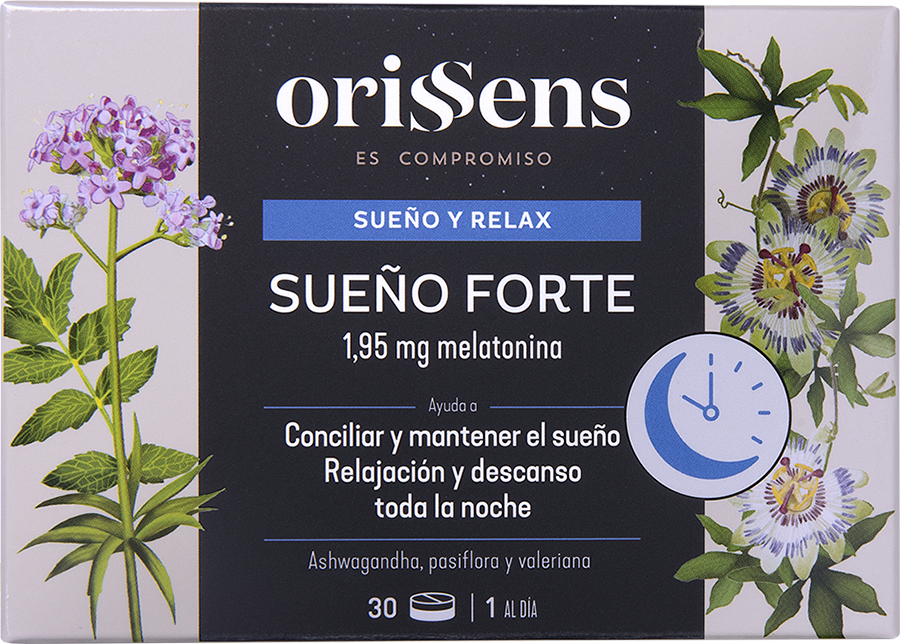
Orissens Sueño Forte 30 Bilayer TabletsNutrition and Supplements Special supplements Orissens Sueño Forte 30 Bilayer Tablets What is Orissens Sueño Forte 30 tablets ? Orissens Sleep Forte 30 tablets is a food supplement formulated to promote quality sleep and help you fall asleep naturally. This product is designed for people who experience difficulty sleeping or who want to improve their sleep quality without resorting to harsh solutions. Thanks to its combination of carefully selected ingredients, Orissens Sleep Forte helps relax the body, supports the balance of the nervous system, and promotes restful sleep. Sleeping well is essential for maintaining physical and mental well-being, improving concentration, and supporting daily recovery. Its tablet form makes it easy to take and integrate into your nighttime routine. Orissens Sleep Forte 30 tablets thus becomes an ideal ally for those looking to improve their sleep habits and wake up with more energy every day. Benefits of Orissens Sleep Forte 30 tablets The formula of Orissens Sueño Forte has been developed to provide multiple benefits related to nighttime rest and general well-being. It promotes falling asleep naturally. It contributes to a deep and restorative rest . It helps to relax the body before going to sleep. It supports the balance of the nervous system . It reduces the feeling of tiredness associated with insufficient rest. Improves sleep quality so you wake up with more energy. Convenient tablet format, easy to incorporate into your nighttime routine. Thanks to these benefits, Orissens Sueño Forte 30 tablets is an ideal option for those who want to improve their rest and daily well-being. Who is Orissens Sueño Forte 30 tablets for? Orissens Sueño Forte is indicated for people who are looking to improve their sleep quality or who have difficulty falling asleep naturally. This dietary supplement may be especially useful for: People who have difficulty falling asleep . Those who suffer from frequent night awakenings . People with daily stress or tension that affects rest. Those who wish to improve their sleep quality naturally. People with demanding lifestyles who need adequate nighttime recovery . Incorporating Orissens Sueño Forte 30 tablets into your daily routine can help improve sleep and promote a greater sense of well-being upon waking. How do you apply Orissens Sueño Forte 30 tablets ? Orissens Sueño Forte is easy to use and integrates seamlessly into your bedtime routine. For best results, it is recommended to follow the manufacturer's instructions and maintain healthy sleep habits. Take the tablet with a glass of water. Consume at night, 1 hour before going to bed. Follow the recommended daily dose. Do not exceed the indicated amount. A relaxed environment, avoiding screens before bed, and maintaining regular sleep schedules can enhance the effects of the product. Product use Orissens Sueño Forte 30 tablets is designed to be used as support in the night routine when you want to improve falling asleep and the...10,81 £*Shipping: 3,99 £Secure redirect to the provider
-
Sincere Surroundings Weatherproof Porch Boards Hide PackagesA witty welcome for the home where packages are a closely guarded secret, this porch board is designed to greet every delivery driver and guest at the front door with humor and charm.42,99 $*Shipping: 0,00 $Secure redirect to the provider
-
What does liquid crystal bilayer mean?
A liquid crystal bilayer refers to a structure composed of two layers of liquid crystal molecules. Liquid crystals are a state of matter that have properties between those of conventional liquids and solid crystals. In a bilayer, the liquid crystal molecules are arranged in an organized manner, forming distinct layers. This structure is commonly used in various applications such as in liquid crystal displays (LCDs) and in the study of biological membranes. **
-
What is the structure of a lipid bilayer?
A lipid bilayer is composed of two layers of phospholipid molecules arranged with their hydrophobic tails facing inward and their hydrophilic heads facing outward. This structure creates a barrier that separates the interior of the cell from the external environment. The lipid bilayer is flexible and allows for the movement of molecules in and out of the cell through processes such as diffusion and facilitated transport. Proteins are often embedded within the lipid bilayer, helping to regulate the passage of specific molecules and ions. **
-
What is the structure of the phospholipid bilayer?
The phospholipid bilayer is composed of two layers of phospholipid molecules arranged in a double layer. Each phospholipid molecule has a hydrophilic (water-attracting) head and two hydrophobic (water-repelling) tails. In the bilayer, the hydrophilic heads face outward towards the aqueous environment while the hydrophobic tails face inward, creating a barrier that separates the inside and outside of the cell. This structure provides the cell membrane with its selective permeability and fluidity. **
-
Why can ions not pass through the lipid bilayer?
Ions cannot pass through the lipid bilayer because the lipid bilayer is made up of hydrophobic tails that repel charged particles. This creates a barrier that prevents ions from freely diffusing across the membrane. Additionally, the lipid bilayer is a nonpolar environment, which is not conducive to the passage of charged ions. As a result, ions require the assistance of ion channels or transport proteins to facilitate their movement across the lipid bilayer. **
Similar search terms for Bilayer
-
Sincere Surroundings Porch Board Weatherproof Blessed Colorful Pumpkins - 8x46.5x.5"Weatherproof porch boards! Engineered to withstand the harshest elements and ensure unmatched durability. These porch boards are the perfect foundation for your outdoor space. Proudly designed, manufactured and printed in the USA. Size: 8"" x 46.5"" x..."47,49 $*Shipping: 0,00 $Secure redirect to the provider
-
Who has a good idea for setting up tea light lanterns outdoors?
One good idea for setting up tea light lanterns outdoors is to hang them from tree branches using clear fishing line. This creates a magical effect as the lanterns appear to be floating in the air. Another idea is to place the lanterns along a garden pathway to create a warm and inviting atmosphere. Additionally, using decorative lantern stakes to place the tea light lanterns around a patio or outdoor seating area can add a cozy ambiance to the space. **
-
What are typical exam tasks in biology for 10th grade in the introductory phase of upper secondary school on the topics of proteins, biomembranes, phospholipid bilayer, diffusion, and osmosis?
Typical exam tasks for 10th-grade biology students in the introductory phase of upper secondary school on the topics of proteins, biomembranes, phospholipid bilayer, diffusion, and osmosis may include identifying the structure and function of proteins, explaining the role of biomembranes in cell structure and function, describing the composition and properties of the phospholipid bilayer, and understanding the processes of diffusion and osmosis and their importance in cellular transport. Students may also be asked to apply their knowledge to scenarios or experiments to demonstrate their understanding of these concepts. **
-
What are typical exam tasks in Biology for 10th grade in the introductory phase of upper secondary school on the topics of proteins, biomembranes, phospholipid bilayer, diffusion, and osmosis?
In a 10th-grade Biology exam focusing on proteins, biomembranes, phospholipid bilayer, diffusion, and osmosis, typical tasks may include identifying the structure and function of proteins, explaining the role of biomembranes in cell structure and function, describing the composition and properties of the phospholipid bilayer, and discussing the processes of diffusion and osmosis in cells. Students may also be asked to compare and contrast the mechanisms of diffusion and osmosis, and provide examples of these processes in biological systems. Additionally, they may need to apply their knowledge to analyze and interpret experimental data related to these topics. **
-
What is the difference between landscape and landscape ecosystem?
Landscape refers to the visible features of an area of land, including physical elements such as mountains, rivers, and forests. On the other hand, a landscape ecosystem encompasses not only the physical features of the land but also the interactions between living organisms and their environment within that landscape. It includes the relationships between plants, animals, and their surroundings, as well as the flow of energy and nutrients within the ecosystem. In essence, landscape ecosystem is a more holistic concept that considers both the physical and biological aspects of a landscape. **
* All prices are inclusive of VAT and, if applicable, plus shipping costs. The offer information is based on the details provided by the respective shop and is updated through automated processes. Real-time updates do not occur, so deviations can occur in individual cases. ** Note: Parts of this content were created by AI.